
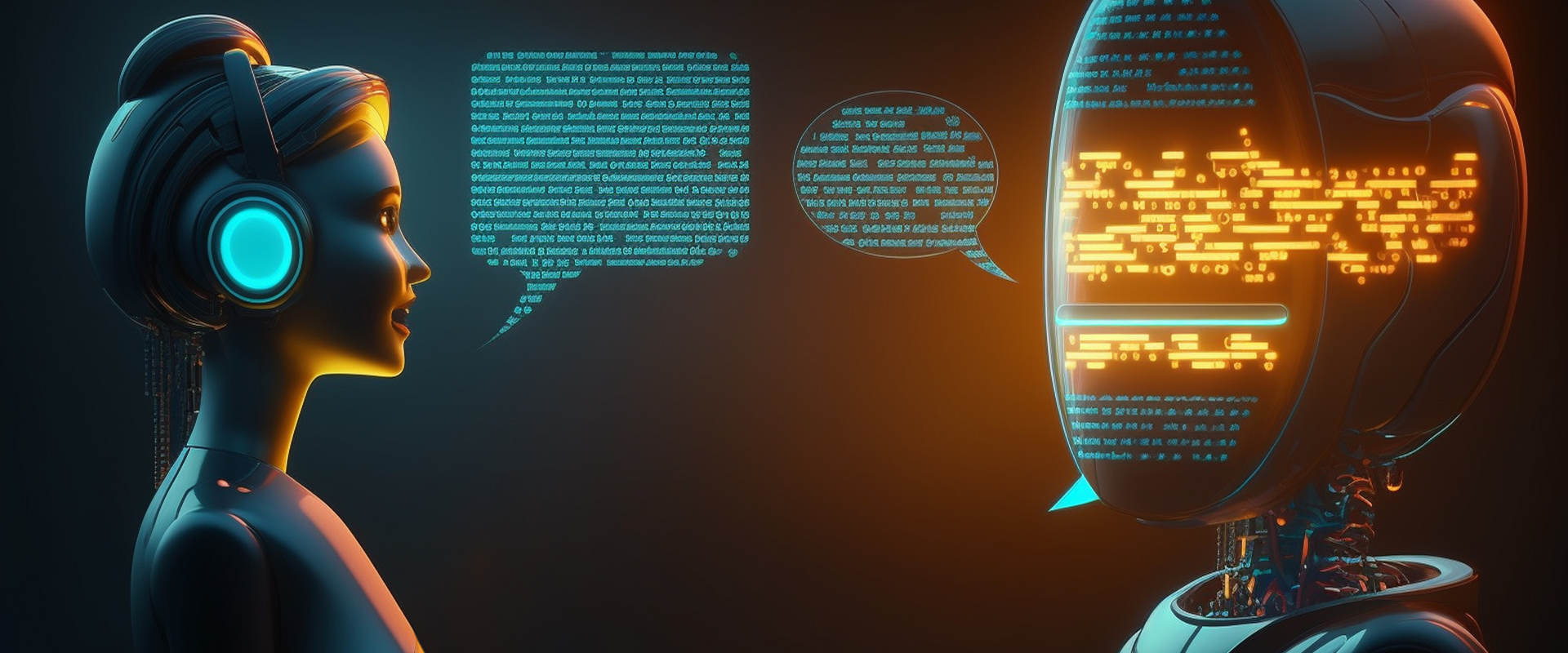
Speech Recognition AI and AI Vision Technology: Powering Next-Gen AI Solutions

Technomark
Apr 21, 2026
7 min read
 0 like
The field of Artificial Intelligence is fast changing from single functional models to more complex AI systems that are able to process and analyze different forms of data at once. Previously, AI was capable of doing one function: either work with written texts, speech, or images. But now the future belongs to those AI systems where natural language processing, speech recognition, and AI vision will be integrated in one model.
Such models have been revolutionizing how business is done because they allow for machines to perceive the world similarly to people—using a combination of sight and hearing. This results in more sophisticated automation, analysis, and experience.
One more critical feature of the new generation of artificial intelligence is its capability to facilitate human-machine communication. When AI can comprehend data of different types, it understands the context, meaning, and nuance of it, which makes communication more efficient.
The transition from single AI solutions to multimodal solutions has been a huge step forward in technology. Previous solutions would be capable of performing tasks like text analysis AI, while some would work on analyzing voices or images. However, currently, such solutions have been combined in a single system.
In such systems, for instance, a video analysis can be done based on several parameters, including visual analysis, conversion of voices into text through speech-to-text AI, and subsequent use of AI text analytics. The reason behind this is because businesses require more value addition from their data.
In fact, the demand for real-time analysis and automation of business processes is increasingly becoming essential. Businesses do not want outputs from different sources analyzed in silos; rather, they would prefer systems capable of integrating multiple data streams together and providing actionable intelligence.
This functionality is provided by natural language processing artificial intelligence, which helps computers comprehend, interpret, and even produce human language. Natural Language Processing serves as a bridge that connects diverse data types by converting spoken and visual data into useful insights.
Thanks to innovations in AI text analytics, businesses are able to work with huge amounts of unstructured information in the form of emails, chats, and documents. As a result, organizations get the chance to learn more about their customers' behavior, streamline communications, and optimize operations.
Additionally, natural language processing keeps evolving, improving its capability of understanding context and creating language. With the help of such advanced functionality, computer-based technologies start to produce content in response to input information in addition to analyzing it.
The technology of speech recognition has turned out to be one of the major technologies utilized in developing AI systems that would be able to comprehend human speech inputs and respond appropriately. With speech-to-text AI in mind, companies can make use of verbal language and convert it into text.
This process is applicable in various spheres of business activity including virtual assistants, automation of customer services, transcription of meetings, etc. Moreover, by applying text analysis AI alongside speech technology, the collected information can be analyzed in regard to its sentiments, meaning, and valuable insights.
It should be noted that the progress in speech recognition technology has resulted in better precision rates in terms of various languages and accents used in a variety of conditions.
AI vision technology allows machines to analyze images and videos in terms of their interpretation. The technology supports visual analysis and features such as object recognition, face recognition, and scene analysis.
The technology becomes even more advanced when incorporated with other types of AI technologies such as natural language processing and speech recognition AI technology. For example, an AI machine can be able to analyze a video stream and give out a response by analyzing both visuals and audio.
Advanced deep learning and computer vision techniques now allow for more accurate analysis and analysis that is in real time. This has enabled businesses to incorporate this kind of technology to automate processes such as inspections and customer analysis.
AI's real power comes from the integration of text, voice, and visual AI systems that combine all three capabilities in one. These systems have become indispensable in changing business processes.
In the sphere of customer service, for instance, an AI system will be able not only to comprehend the questions of the customers but also to read the tone of the conversation and even analyze the picture attached. In the medical sphere, for instance, a doctor will be able to use AI technology to examine not only the picture taken but also the patients' records and voice memos.
Besides, there are plenty of applications in the business sphere itself.
The usage of multimodal artificial intelligence technology is becoming increasingly popular in numerous industries. Enterprises are utilizing these tools to achieve personalization and efficiency through the combination of different types of information in one ecosystem.
For instance, when dealing with customer experience, companies are deploying a multimodal approach with voice, visual, and chat features for a unified interaction. In medicine, multimodal AI combines images from medical examinations, medical history information, and voice commands to facilitate better diagnostics and therapy.
Furthermore, industries such as retail, finance, and education incorporate AI text analytics and speech recognition AI together with vision features to achieve improved user engagement, risk detection, and interactive learning experiences.
Nevertheless, building AI systems is not without its hurdles. The integration of multiple types of data involves elaborate architecture, immense computing power, and vast amounts of data.
Data accuracy, data privacy, and real-time processing are major issues that have to be addressed. Furthermore, aligning the output of diverse AI models to produce an appropriate response is a technical issue.
A crucial challenge is related to ethics and data governance. Organizations need to make sure that their AI systems are transparent and unbiased and adhere to all applicable regulations.
The future of AI is about building a system where it becomes easier to interpret and engage with the surrounding environment using several modalities.
As the multimodal AI solution continues to develop in the future, such systems will become increasingly intelligent, more adaptable to different contexts, and able to solve complex tasks.
AI speech recognition technology, AI vision solutions, and natural language processing AI will be widely used for innovations and business improvement. Not only will such solutions help businesses automatize their processes; however, they will also become an asset for humans to achieve better results.
With further improvements in the field of AI, the gap between human thinking and machine capabilities will significantly narrow. Such solutions will be indispensable to any sphere of activity.
The merger of visual data, speech, and text represents a new epoch for AI technologies. By using AI text analysis technology, speech to text AI, and AI vision technology, companies can create sophisticated advanced AI systems that go beyond mere automation.
As companies keep implementing advanced AI solutions, they can be expected to find new ways to innovate, become more efficient, and increase their value. In the age of AI, success does not lie in individual elements of technology but in the creation of intelligent systems capable of analyzing the world comprehensively.
In conclusion, those companies that implement such systems early on will have an edge over their competitors because of improved decision making and enhanced customer experience.
Share article


Loading related articles…